


Page 121 - Flash Preview
P. 121
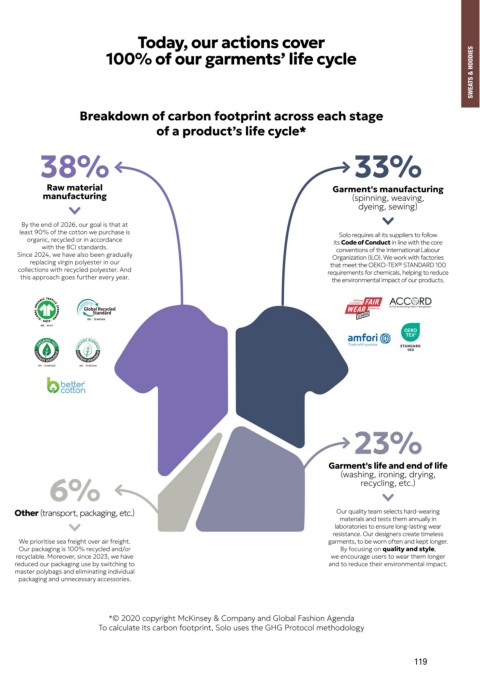
Today, our actions cover
                                                                                                                      SWEATS & HOODIES
                           100% of our garments’ life cycle


                     Breakdown of carbon footprint across each stage

                                        of a product’s life cycle*


           38%                                                                           33%

             Raw material                                                           Garment's manufacturing
            manufacturing                                                               (spinning, weaving,
                                                                                          dyeing, sewing)

      By the end of 2026, our goal is that at
      least 90% of the cotton we purchase is                                         Solo requires all its suppliers to follow
        organic, recycled or in accordance                                          its Code of Conduct in line with the core
           with the BCI standards.                                                  conventions of the International Labour
     Since 2024, we have also been gradually                                       Organization (ILO). We work with factories
        replacing virgin polyester in our                                          that meet the OEKO-TEX® STANDARD 100
     collections with recycled polyester. And                                     requirements for chemicals, helping to reduce
      this approach goes further every year.
                                                                                   the environmental impact of our products.


                       IDFL    TE-99972636


          IDFL    TE-99972636  IDFL    TE-99972636


                                                                                         23%


                                                                                   Garment's life and end of life
                                                                                     (washing, ironing, drying,
             6%                                                                           recycling, etc.)


    Other (transport, packaging, etc.)                                              Our quality team selects hard-wearing
                                                                                     materials and tests them annually in
                                                                                    laboratories to ensure long-lasting wear
                                                                                    resistance. Our designers create timeless
      We prioritise sea freight over air freight.                                 garments, to be worn often and kept longer.
      Our packaging is 100% recycled and/or                                          By focusing on quality and style,
     recyclable. Moreover, since 2023, we have                                     we encourage users to wear them longer
     reduced our packaging use by switching to                                     and to reduce their environmental impact.
     master polybags and eliminating individual
     packaging and unnecessary accessories.


                            *© 2020 copyright McKinsey & Company and Global Fashion Agenda
                         To calculate its carbon footprint, Solo uses the GHG Protocol methodology


                                                                                                        119

